


Earning a Bachelor's degree is one of the most important steps you can take towards increasing your earning potential and job opportunities.
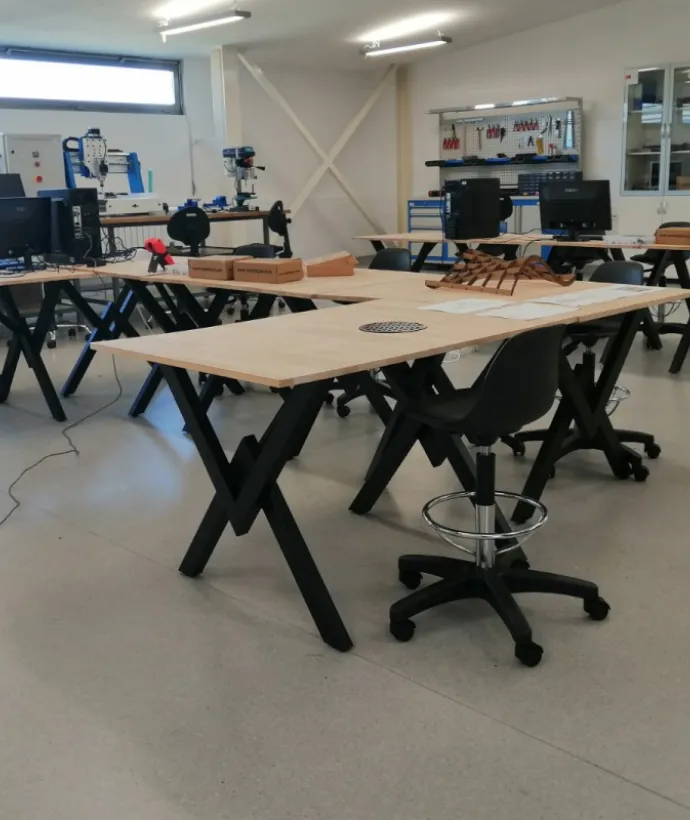
The program is designed so that it teaches students problem-solving and mathematical skills as well as logical reasoning, providing in-depth knowledge in computer systems and programming. Most courses involve practical work, such as weekly sessions in the computer laboratory where students acquire technical and research skills. Project-based learning as well as liberal art courses prepare our students for soft skills, such as teamwork, written and oral communication skills which are crucial for a successful employment career.
CSE impacts a wide range of disciplines ranging from embedded systems, bioinformatics, telecommunications, cybersecurity, artificial intelligence, healthcare and many more. Other than offering core foundation courses in CSE, students are able to select and shape their specific interests within the CSE curriculum by choosing from a variety of courses offered within the Program Elective courses such as Artificial Intelligence, Computer Graphics, Computer Vision, Computer and Network Security, Wireless Mobile Networks, Robotics, etc. Furthermore, a large number of elective courses allow CSE students to choose courses from other scientific fields offered at IUS.
Having a degree in CSE is often rated as having one of the best career opportunities. The employment opportunities for graduates of CSE are large and are constantly rising. It is one of the disciplines that provides job opportunities that spans a wide range of other disciplines (bioengineering, electrical engineering, industrial engineering, business, etc.). CSE graduates have a wide spectrum of employment opportunities such as computer programmer, software designer, software developer, systems developer, web developer, computer network architect, network and computer system administrator, database administrator, database analyst, IT consultant, financial analyst, etc.
Candidates who are citizens of foreign countries can submit preliminary application for admission before the official call is published by the University, so that they can obtain necessary residency permits and satisfy language requirements prior to the start of lectures at the University.
Seek professional and academic opportunities in computing, engineering, and related fields, applying strong foundations in algorithms, systems, and software development.
Pursue continuous learning and advanced studies to strengthen their analytical, problem-solving, and technical expertise.
Contribute to the design and development of software and computer systems by applying systematic engineering approaches in professional and research projects.
Assume leadership, research, or entrepreneurial roles in technology-driven industries, academia, and organizations.
Demonstrate awareness of ethical, legal, and societal responsibilities in the practice of computer sciences and engineering.
Demonstrate a sound knowledge of the basic theoretical aspects of computer sciences and engineering, with a focus on software development practices, algorithms and computer systems organization, and other various computing areas.
Apply the necessary strong mathematical skills and logical reasoning to solve engineering and scientific problems.
Effectively document and analyze requirements and translate them into an implementable design using different design patterns applied in the industry.
Analyze, design and develop software systems by following recommended concepts, principles and practice of the industry.
Show an ability to communicate effectively, work in a team and understand social, professional, legal and ethical issues related to computing.
Take the next step towards a rewarding career in Computer Sciences and Engineering. Learn more about our admission requirements and application process.
View Admission Requirements

Students who are interested in obtaining a minor degree from our study programs can see the minor curricula:













International University of Sarajevo - The best private university in Bosnia and Herzegovina